Strength Training for Osteoporosis: Why Building Muscle Matters
An osteoporosis diagnosis doesn’t mean you need to stop being active. In fact, the right exercise program can be an important part of maintaining your strength, balance, and independence.
For many adults, particularly women over 50, an osteoporosis or osteopenia diagnosis can create uncertainty about exercise.
Should you lift weights? Are certain movements dangerous? Is walking enough to keep your bones strong?
At Flynn Fitness in Burlington, Ontario, we believe education and individualized training are essential to helping people exercise confidently.
Understanding Osteoporosis and Osteopenia
Osteoporosis is a condition characterized by reduced bone strength and an increased risk of fractures.
Osteopenia refers to lower-than-normal bone density that has not reached the diagnostic threshold for osteoporosis.
While these conditions become more common with age, particularly after menopause, they don’t mean you should automatically avoid physical activity.
In fact, appropriately selected exercise is widely recommended as part of a comprehensive approach to bone health.
Why Strength Training Matters
Your bones respond to mechanical loading. When muscles contract and place appropriate forces on bones, they provide a stimulus that helps maintain bone strength.
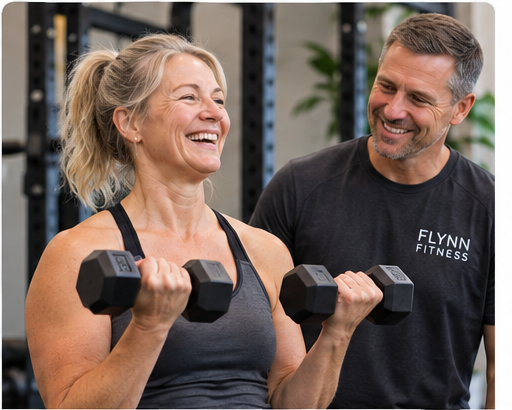
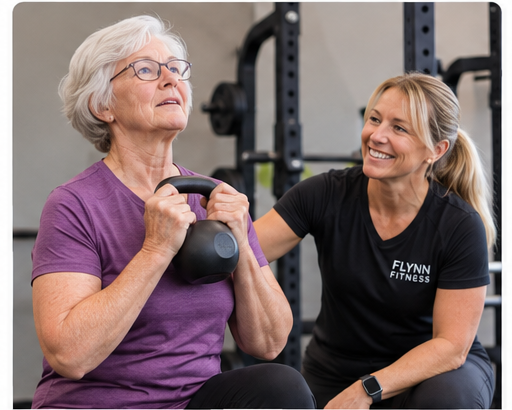
Resistance training can also improve muscle strength, posture, and physical function.
These benefits are particularly important because stronger muscles can help support everyday movement and reduce some of the physical challenges associated with aging.
Strength training may help:
- Maintain or improve bone density in certain areas
- Increase muscle strength
- Improve physical function
- Support better posture
- Improve stability and balance
- Reduce some risk factors associated with falls
However, not every exercise is appropriate for every individual.
Not All Exercises Are Created Equal
One of the most important considerations when training someone with osteoporosis is choosing exercises based on their individual fracture risk, medical history, and physical abilities.
For example, someone with a history of vertebral compression fractures may require different modifications than someone with mild osteopenia and no previous fractures.
Exercises involving loaded spinal flexion, forceful twisting, or uncontrolled movements may be inappropriate for some individuals.
This is why a generic workout program found online isn’t always the best approach.
A properly designed program should consider your medical history, movement capabilities, strength, balance, and healthcare recommendations.
The Importance of Balance and Fall Prevention
When discussing osteoporosis, we often focus exclusively on bone density.
But preventing falls is also extremely important.
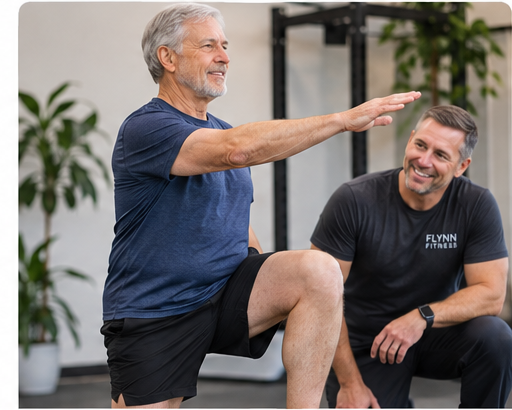
Improving lower-body strength, balance, coordination, and confidence during everyday activities can help reduce fall risk.
Simple activities such as getting up from a chair, navigating stairs, or walking across uneven surfaces require strength and stability.
A comprehensive exercise program should address these abilities, not just the numbers on a bone density scan.
Specialized Guidance at Flynn Fitness
At Flynn Fitness, bone health is an important part of our approach to training.
Our co-owner, Leigh Flynn, brings approximately 20 years of experience as an emergency room nurse, a background in Human Biology, and BoneFit Level 1 and Level 2 training.
Her medical background and specialized education help inform our approach to working with individuals concerned about osteoporosis, osteopenia, and maintaining physical independence.
We focus on individualized programming, appropriate exercise modifications, and helping clients understand how to move confidently.
We also recognize that exercise is only one component of osteoporosis management. Medical assessment, nutrition, medications when indicated, and ongoing healthcare guidance remain important.
It’s About More Than Bone Density
For many people, the greatest benefit of becoming stronger is feeling more capable in everyday life.
Being able to carry groceries, get out of a chair, maintain balance, and continue enjoying activities you love can make an enormous difference in your quality of life.
An osteoporosis diagnosis should encourage a thoughtful approach to exercise, not necessarily an inactive lifestyle.
Take the First Step Toward Stronger Living
If you’ve been diagnosed with osteoporosis or osteopenia and are unsure where to begin, Flynn Fitness offers personalized training with a strong emphasis on safety, strength, and long-term mobility.
Book a consultation with Leigh Flynn and learn how an individualized exercise program may support your bone health and overall strength.